The storm roll is often harder to learn than layback rolls or the reverse sweep. But it’s absolutely worth the effort.
It’s fast, efficient, and keeps you in a strong, active paddling position. You even finish in a low brace, making it a highly practical roll for rough water. For many paddlers, it becomes the go-to when conditions get serious. Having said that: a solid layback roll should always be the foundation.
The Mindset
If you’re working on a storm roll, chances are you already have a few other rolls in your toolkit. That also means you enjoy learning, experimenting, and challenging yourself.
Those qualities matter. This is a front-to-front roll, and it asks for a slightly different kind of awareness and control. Patience and curiosity will take you a long way.
The Setup
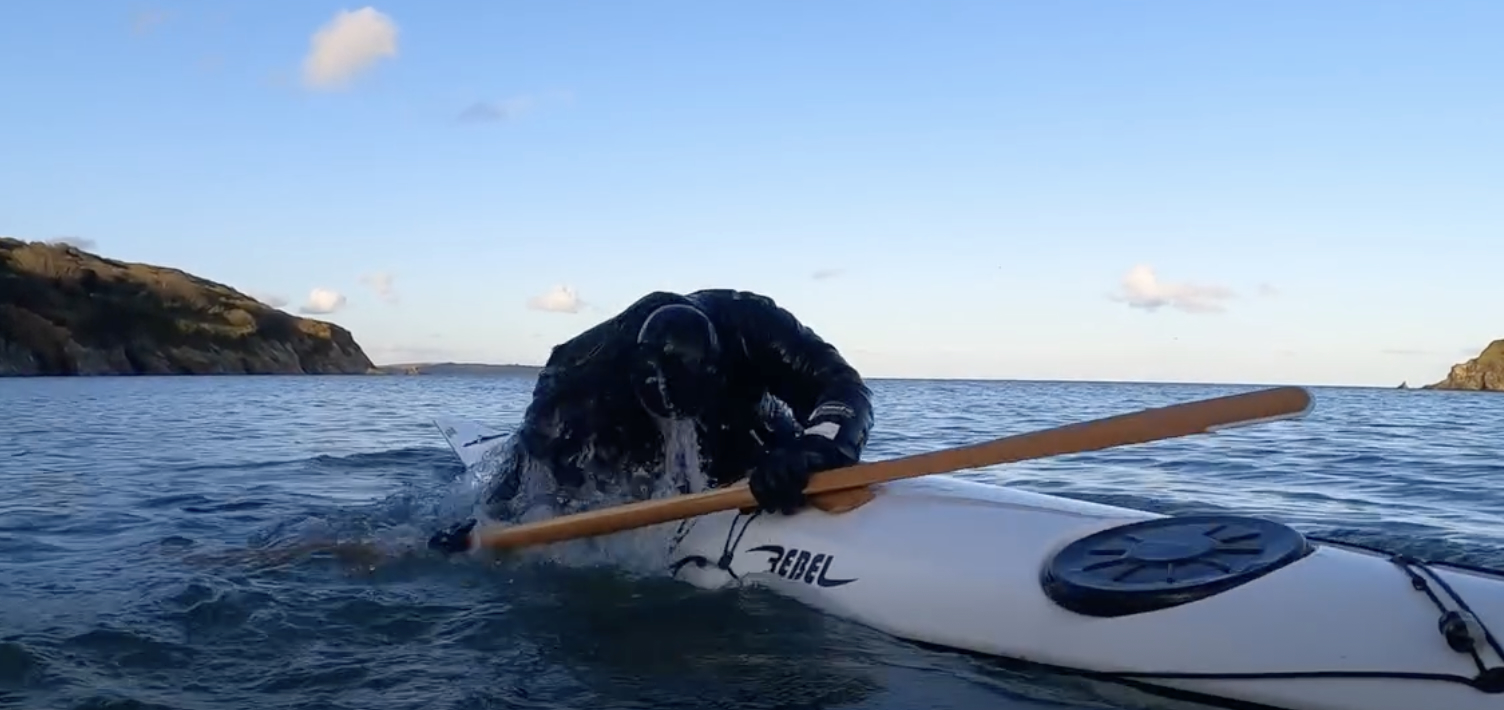
Start forward, with your nose over your knee on the paddle side.
Maintaining this forward tuck is crucial—even after you capsize. Think about pushing your face close to the surface after capsize, almost pushing it out of the water. The tighter and more connected you are to the kayak at this early stage, the easier everything becomes.
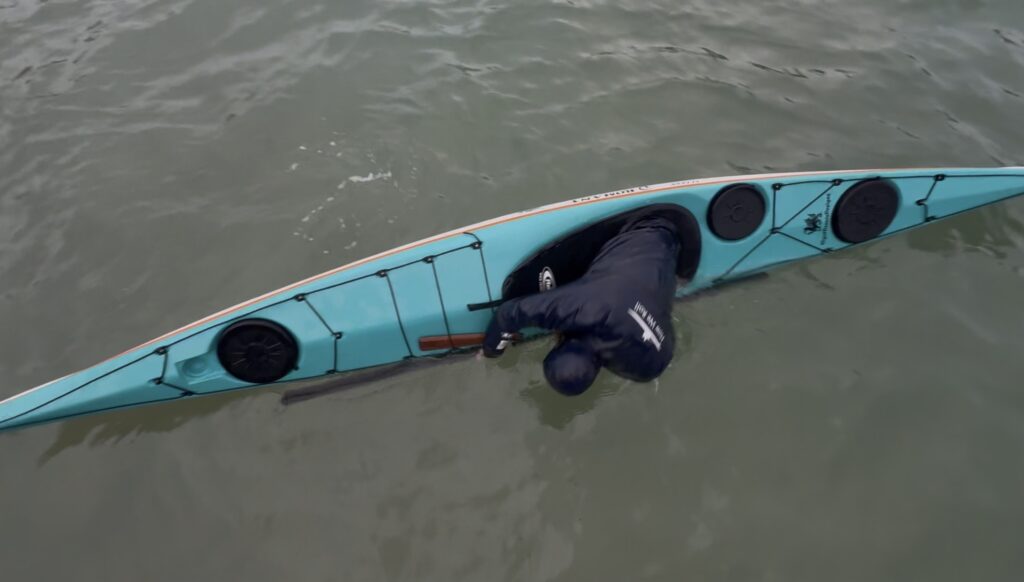
This is why we load the kayak before we start rolling the kayak. In this face to surface position:
- Bring the top knee up—almost towards your face
- Let the other leg drop towards the centre
This creates a strong connection as you can use your core muscles to keep you close at the surface and sets you up for a much lighter, more effortless roll.
The Engine: Legs and Hips
The loading of the kayak has a second important meaning: it sets you up for the roll. The real power of the storm roll comes from the lower body – the legs and hips.
This may take a wile but your goal is to understand how your legs and hips work together while your upper body stays relaxed—neck, shoulders, arms, and hands. This is often the most puzzling part:
When done right, there’s no need to push on the paddle.
Instead:
The top leg drives down while at the same time, the bottom leg drives up to bring the kayak upright
This opposing leg action is what creates the rotation. Both legs are active and working together.
If the top leg doesn’t drop, you end up working against yourself. The roll will feel heavy, forced, and often stall before completion. We call this leg the panic leg as it often engages when things don’t go well. Therefore you do yourself a big favour learning this movement in a safe environment with help (e.g. on a course or with a friend). Otherwise you will probably learn to use the wrong leg and that can add years to the learning of the roll.
The Paddle and Body Movement
Your paddle setup and blade angle shape how the roll feels:
- A good angle allows a smooth, efficient sweep
- A poor angle turns it into a heavy pull through the water
Hold the paddle lightly. Reach high up with your rear hand- it needs to be much higher than you think on the bottom of the kayak. Then let it move across the surface rather than forcing it in a downward pull.
As this happens, your body rotates:
- From looking up towards the sky
- To looking down towards the water
Your head becomes the centre of this movement. Keep it relaxed and supported by the water, don’t lift it.
When It Clicks
When everything comes together, the storm roll feels almost effortless.
There’s a sense of the kayak rolling up beneath you, rather than you pulling yourself up. That “magic” feeling comes from a combined movement:
Strong, well-timed leg drive with a completely relaxed upper body and the paddle on the surface of the water.
Getting It Solid
Getting your first storm roll is a big milestone but it’s only the beginning.
It can take time to make it reliable. The movement is subtle, and there are many factors that need to come together:
- Leg drive
- A tight forward tuck
- Smooth body rotation
- And, importantly, the right blade angle
One common challenge – especially for paddlers using Euro blades – is the instinct to push down on the paddle. It’s hard to resist, but doing so makes the roll much heavier and harder to learn properly (same as using the wrong leg this pushing down will add a lot of time to you learning the roll).
The more you can trust the movement (legs driving, body rotating, paddle staying light) the more the roll will start to feel effortless and consistent. Therefore having someone in the water next to you – who can support if needed while learning will speed the process up!
Comments are closed