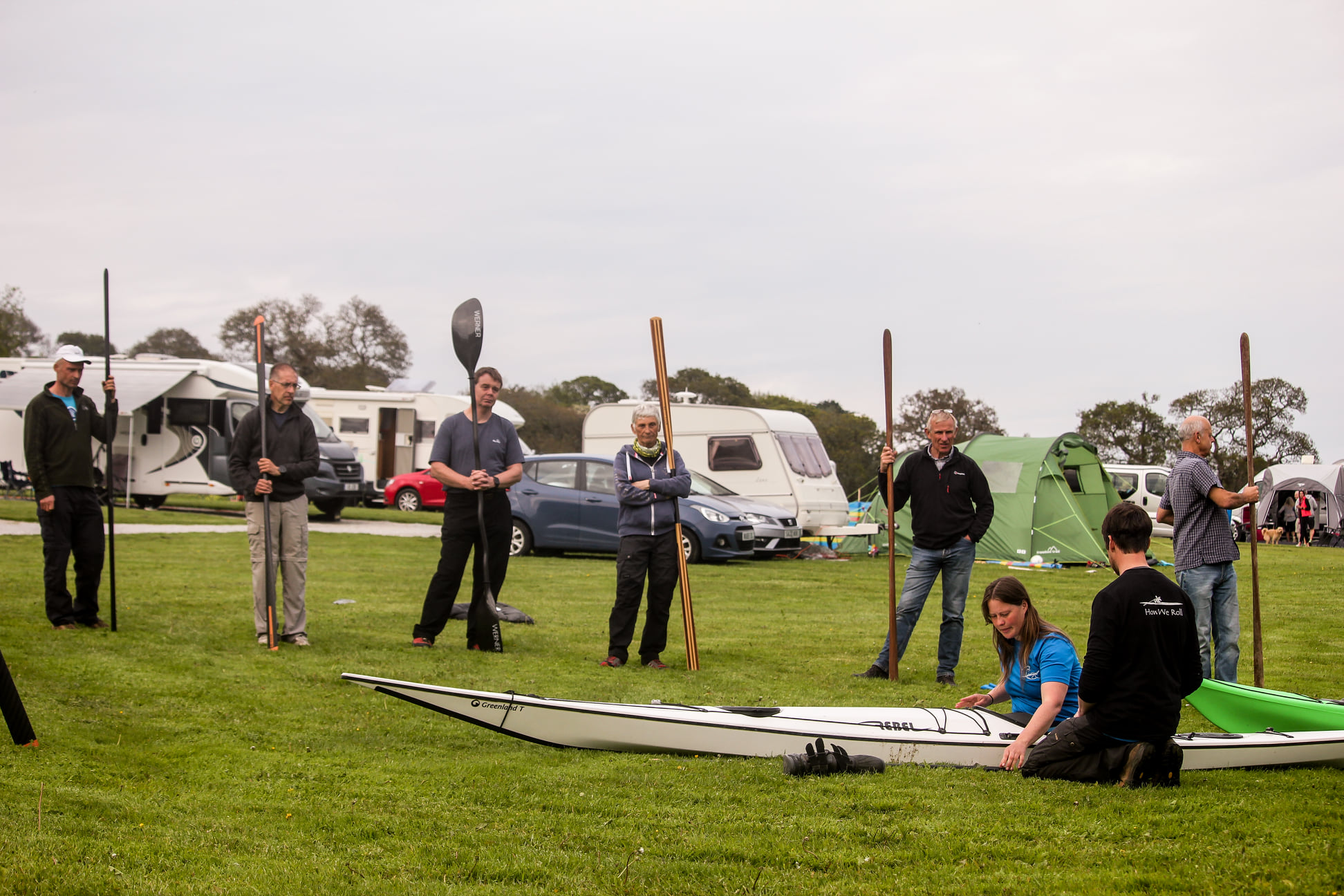
At a recent symposium, I had a client with a Euro paddle who assumed he wasn’t allowed to join our Greenland rolling session because he had the “wrong” paddle.
I ask him to stay.
Moments like that made me wonder if paddle choice has become a bigger divider than it needs to be? Does it shape not just how we paddle, but even who we paddle with? And more importantly we may get a clear separation for coaching: is that actually useful?
Clearly, you need to use Greenland paddles differently to Euro blade paddles – we teach that regularly, otherwise you won’t get the efficiency that comes with the different paddling technique.
But…across many areas of kayaking – forward paddling, edging, and especially rolling – there’s a common thread that may be hidden first: while the paddle is important, the movement begins in your body. The better you understand this, the more skilled and adaptable you become.
I find this most obvious when it comes to rolling, while we initially learn with a paddle in our hands, it is still possible to learn rolls where the paddle is removed completely. Hand rolls can be as powerful as a paddle roll and the kayak comes up based entirely on how well you connect to the kayak and use your body.

In other skills, like forward paddling, the same principle applies. The paddle plays a bigger role in propulsion and timing, so it’s easy to think of it as the source of power. But in reality, it’s simply transferring what your body is already doing.
Good paddling comes from being connected to the kayak. Without that connection, even strong paddle strokes feel inefficient. With it, small movements in your body translate directly into control of the boat.
This means the efficient movement is a whole-body action. In forward paddling, the legs drive alternately, the hips rotate, and the torso follows. We may add a crunch movement of the upper body to it. The arms and hand stay relatively relaxed, acting as a link rather than a source of power. When this sequence is timed well, the kayak moves smoothly and efficiently. When it doesn’t, the tendency is to pull harder with the arms, which quickly becomes tiring and far less effective.
The same principle applies to overall kayak control. Edging, turning, and balance are not primarily paddle-driven skills. They come from shifts through the hips, pressure through the knees, the ability to rotate the body and an awareness of how the hull interacts with the water. The paddle supports these movements, but it doesn’t replace them. This is why experienced paddlers often appear calm and effortless, the real work is happening with the body, not in big, visible strokes.
As said earlier, rolling brings all of this into sharp focus. In a hand roll, there is no paddle: only connection to the kayak, leg drive, upper body rotation, and the ability to find a floating position on the surface. In something like a Greenland layback roll, the paddle simply adds support. When it works well, it feels effortless. Even in forward paddling, where the paddle clearly matters more, the body remains the main focus. When the movement is right, the paddle feels light and responsive. When it’s not, the paddle becomes something you fight against.
I think this is where the discussion around using different paddle types such as Euro blades and Greenland paddles becomes more interesting. They are different tools, and they do influence how strokes and rolls feel. A Euro blade offers more immediate power and acceleration, while a Greenland paddle encourages a smoother, more continuous application of force. They can lead paddlers towards slightly different styles, and in certain situations, whether it’s rough water, long-distance paddling, or specific rolling techniques, those differences matter.
At the same time, both paddles can be used in a more powerful or a more relaxed way depending on your specific technique. Therefore while the differences are real, they are not as limiting as they are sometimes made out to be.
The fundamentals remain the same: connection to the kayak, leg drive, hip movement, rotation, and a relaxed upper body. These don’t change with the paddle. The tool changes, and the movement may need to be adapted, for example, applying power later in a canted Greenland stroke, but the fundamentals of bringing your body behind the stroke stay the same. They are simply expressed in different ways.
We find that the Greenland paddle can be a particularly powerful teaching tool. It encourages a focus on body movement, connection, and efficiency, especially in rolling. This becomes obvious when people learn their first roll- it is much easier to teach a body focused roll with a Greenland paddle and the success rate is much higher. Others will argue that, for example, wing paddles are unmatched for developing forward paddling performance.
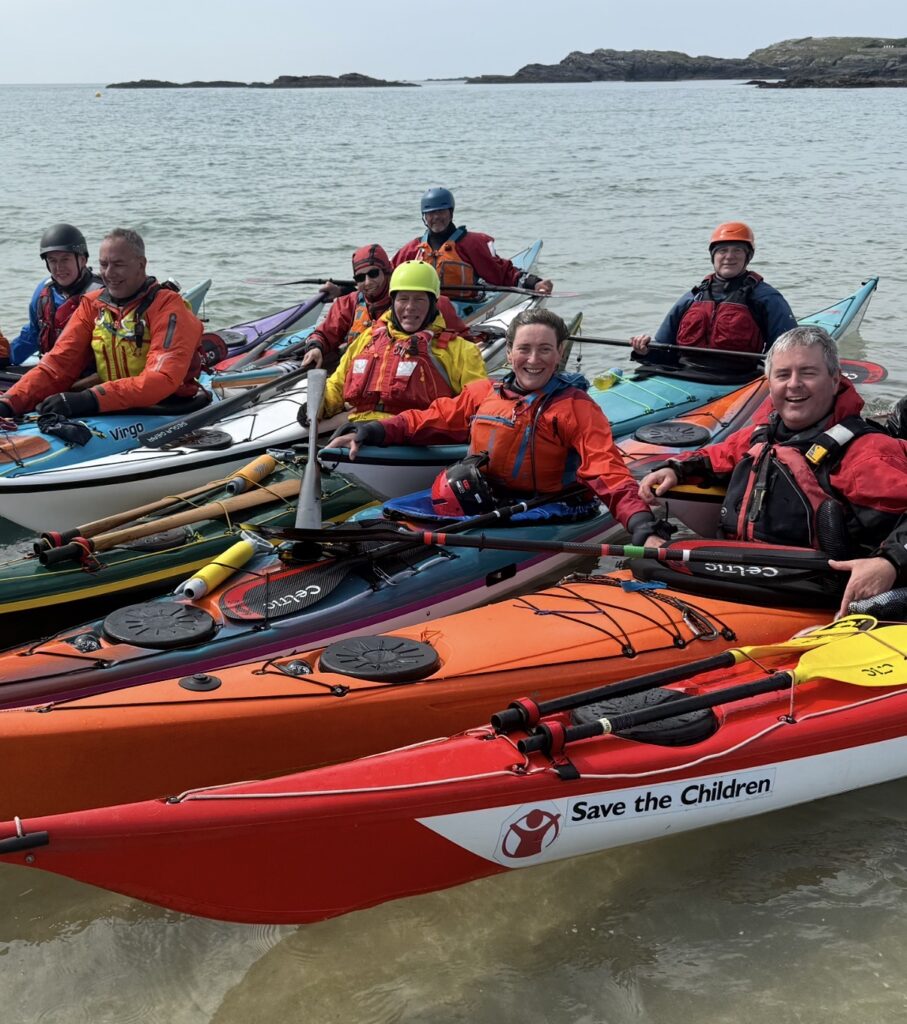
We tend to favour Greenland paddles, but that’s ultimately a personal choice. We also value teaching in mixed groups, where different paddle types come together. Rather than dividing paddlers, this often leads to better conversations, deeper understanding, and more adaptable skills.
So perhaps the question isn’t which paddle is better or if we have to keep groups using different paddles separated, but whether our approach to paddling and/or teaching allows for flexibility, curiosity, and shared learning. Because in the end, those are the things that lead to more skilled and more complete paddlers. There is no reason why we can’t teach mixed groups as it encourages the understanding of the body movement behind the paddling skill and participants can try out the other paddle type and question their own choice (for different situations). Most importantly it encourages to think about the true mastery of kayaking techniques – through using the body efficiently.
Comments are closed