We find that one of the most rewarding things about rolling isn’t just learning the skill itself: it’s becoming part of a group of people who genuinely enjoy helping each other improve. Consequently, everyone’s personal skill level tends to rise as well. But why is that such a transformative experience?
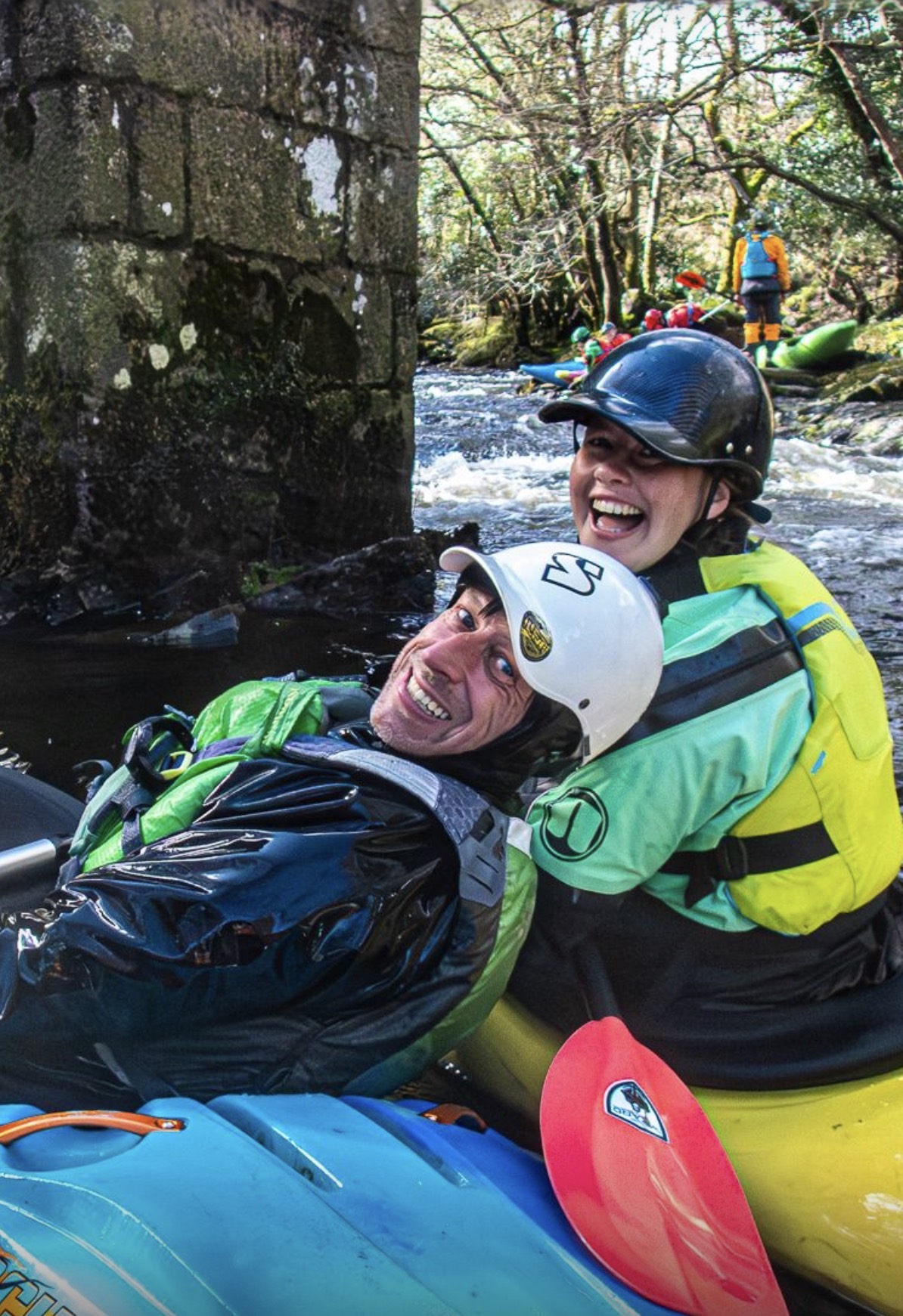
Rolling has a unique way of bringing people together, and we hope people can feel that on our courses. Everyone spends time upside down, misses rolls, and experiments. There are moments where something that worked perfectly earlier suddenly doesn’t work at all.
At the same time, there’s a shared sense of exploration, finding out what works for everyone. At its best, learning together creates a culture where progression feels shared rather than competitive. That also means someones success can inspire others to follow and give that new roll a go.
But sadly, things can also go the other way.
Like any skill, rolling can become tied up with how we feel about ourselves: how many rolls you know, how “bombproof” your roll is, whether you can hand roll, and so on. But this doesn’t only show up through competitiveness or showing off. It can also appear in quieter, more diminishing ways: worrying about looking silly, feeling embarrassed to fail, apologising constantly, or quietly deciding you’re “not good enough” to try something.
Both behaviours are driven by ego, just pointing in different directions. And both can get in the way of learning.
Therefore, the culture and openess built around practice matters very much.
The healthiest rolling groups we’ve experienced are the ones where failure is normal, experimentation is encouraged, and even experienced paddlers are happy to fail, laugh at themselves, and keep learning publicly. Those environments make it easier for everyone to relax and improve, and that’s especially important for advanced rollers. That said- this is not always easy and it most people will have bad days.
A good rolling group becomes a place where people help each other, exchange ideas, celebrate breakthroughs, and quietly absorb better habits simply by spending time together. One paddler figures out a smoother setup, another finds a better way to explain a movement, someone else discovers a tweak that suddenly makes the recovery feel effortless. Skills spread through conversation, experimentation, and encouragement. This also leads to a more sustainable and consistent way of learning new skills: by finding out for yourself but in a supported environment.
Therefore, a community environment is incredibly empowering for paddlers of all levels. Beginners gain confidence faster because mistakes are treated as part of the process rather than as failure and they get a sense of what is possible by watching others. More experienced paddlers deepen their understanding because teaching others forces you to think carefully about what actually makes a technique work.
It changes the way coaching happens. Instead of rigid instruction, learning becomes collaborative. Different paddlers respond to different explanations, rhythms, and drills. A supportive rolling community naturally becomes a laboratory for better teaching approaches because everyone is constantly testing ideas together.
We’ve found that the most positive sessions are the ones where people stay playful and share discoveries freely. Experience should not get in the way of treating everyone as equals- this means switching between being a coach and being coached. This may feel unnatural to begin with for experienced coaches but there is a lot of benefit for everyone in switching roles.
That spirit sits right at the heart of what we do as The Ducklings.
https://the-ducklings.netlify.app
Duckling blog: A quick hello and what to expect from our kayaking and Greenland rolling blog
We are The Ducklings: a small group of friends and sea kayakers who love Greenland rolling. We think hard about how traditional kayaking skills translate into modern sea kayaks, with modern gear, and yes – even with modern euro blade paddles. You’ll rarely see us in traditional Greenland style boats, but you will see us obsessively practicing rolling and taking these traditional-inspired skills into the full range of coastal environments.
This blog is where we’ll share what we get upto, and hopefully give you a sense of the fun you can have when you get your kayak upside down.
Comments are closed