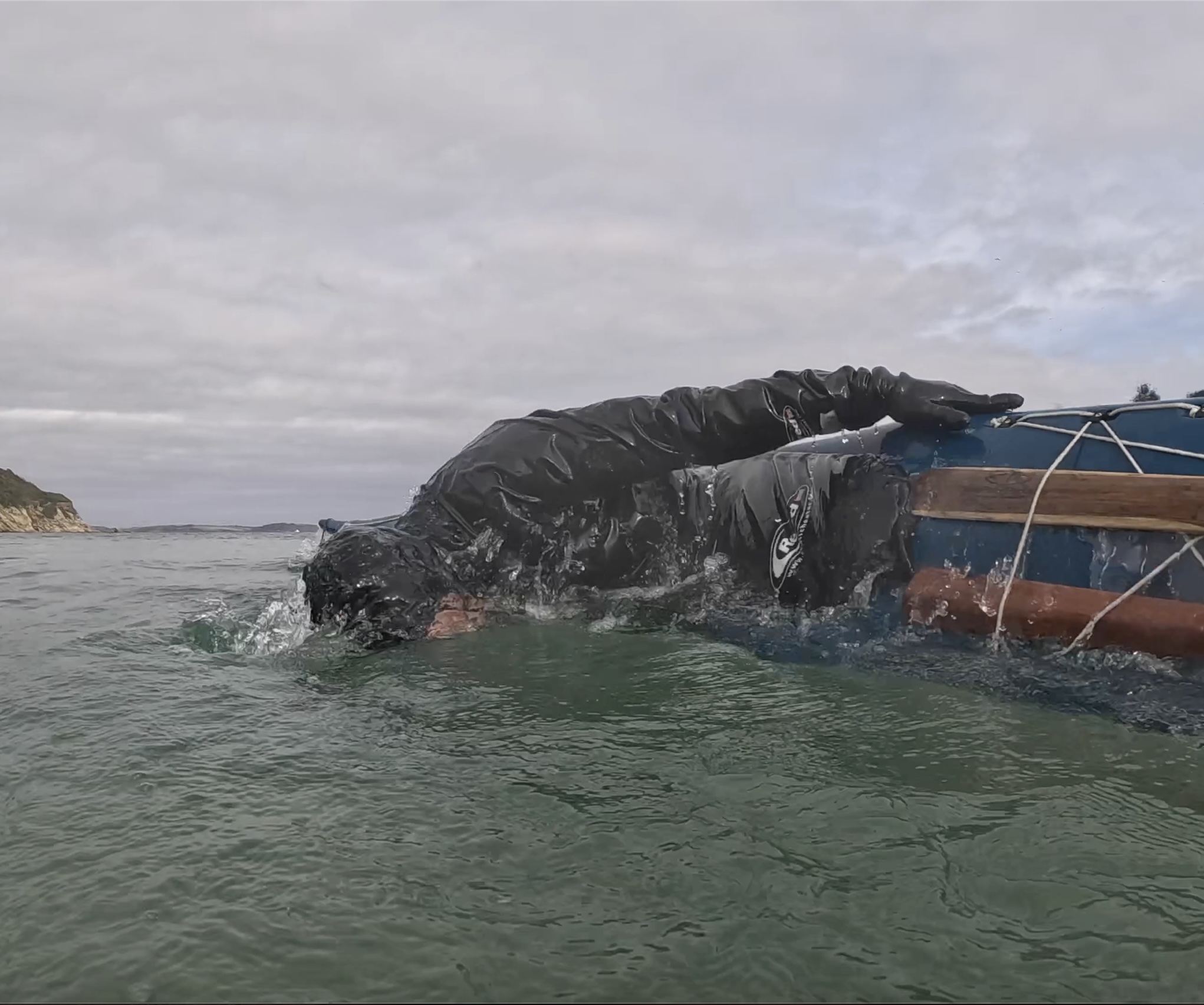
For many of us, the front to front handroll requires years of commitment. Read on at your peril!
Forward finishing hand rolls are one of those skills that sit right at the intersection of technique and feel. They demand flexibility, coordination, and finesse.
It’s all about timing: your lower body drives while your upper body stays relaxed and responsive. When everything lines up, it feels effortless. The kayak rolls up beneath you, your body follows naturally, and for a brief moment it feels almost weightless. However when you have tightness in your upper body (especially back or neck) you will feel it instantly.
When it works it feels like magic. That’s what makes all the failed attempts worth it.
More than anything, these rolls take you on a journey. You’ll fail. A lot. And in that process, you’ll learn not just about movement, but about patience, frustration, and persistence.
The Ingredients
Before chasing this roll, make sure you’ve got a decent Storm Roll and have worked on the following foundations:
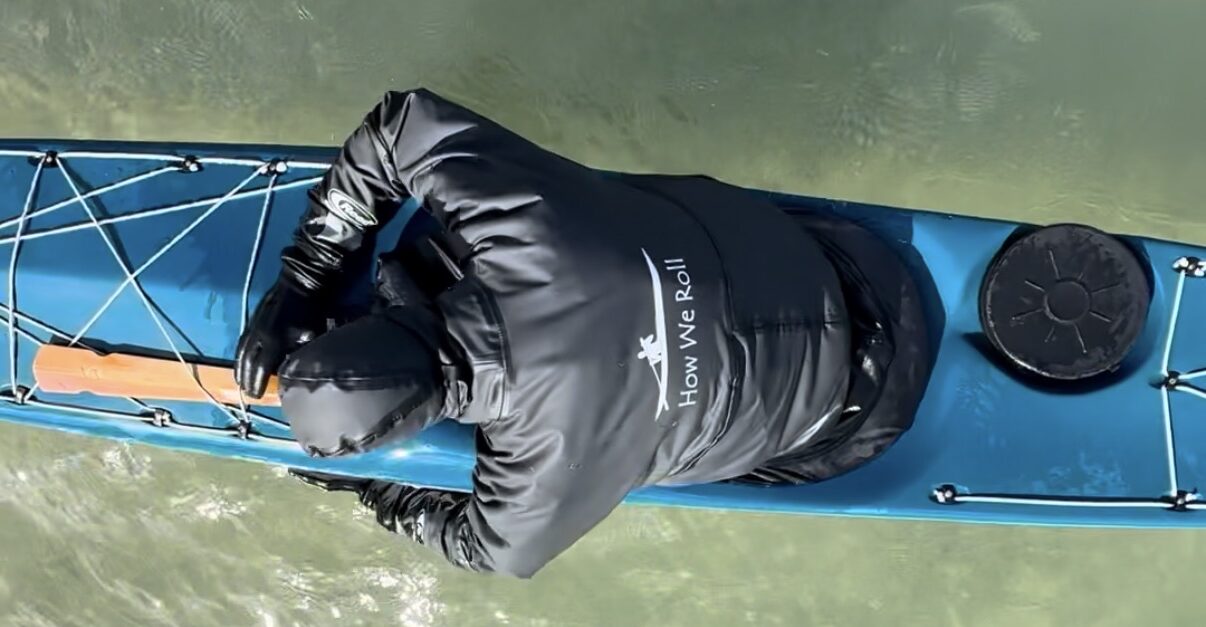
- Forward flexibility: you want to be able to lean right onto the front deck of your kayak. Ideally, you can almost touch it with your nose.
- Load and drive: a concept popularised by James Manke. Load the kayak first, then drive it with your legs. Both legs matter (see our storm roll post).
- Connection to the boat: a tight tuck is everything. Think “knee in your face” pressure when you come up from your capsize before you attempt to roll.
The closer you start to the surface, the better. A strong forward tuck close to the surface reduces effort dramatically and sets you up for success.
The Movement
The roll begins with connection and intention:
- Start tucked forward, close to the kayak and the surface of the water.
- the reach out with your hand along the surface, at the same time rotating from your hips.
- The initial movement is outward, creating resistance.
- Then comes the drive: your legs and hips turn the kayak underneath you.
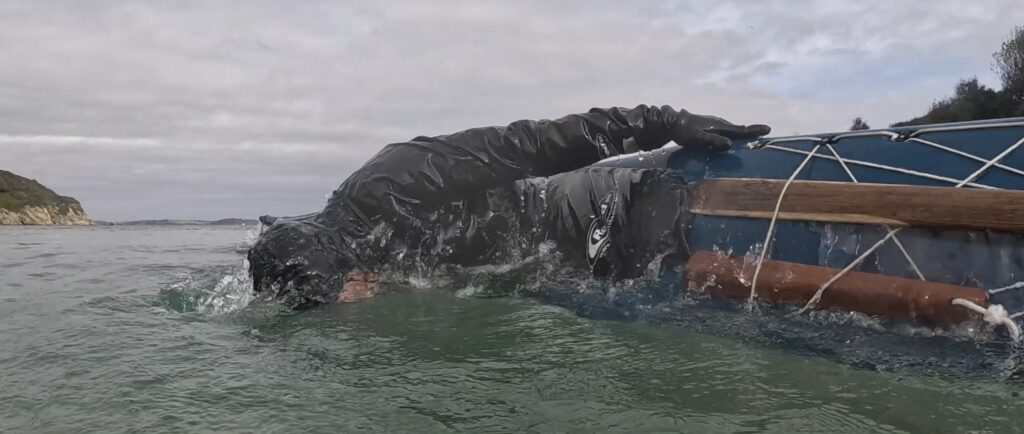
There’s a moment, hard to describe but unmistakable, when it clicks. The kayak suddenly feels powerful, almost like it’s rolling itself. It lifts you out of the water rather than you pulling yourself up.
That moment comes from the right combination:
- Strong lower-body drive (legs and hips).
- Relaxed shoulders and head.
- A controlled, outward reach with body and hand (this is similar to the layback butter fly and hand rolls- reaching out is more important than a downward movement of the hand).
One key element is how the movement actually begins. From your forward tuck, the roll is initiated by gently pushing the top leg forward. This action rotates the hips, which allows the rest of the body to unwind and follow naturally.
This hip rotation helps you move into a more efficient, floating position as you reach out along the surface to turn the kayak. Instead of forcing the upper body, the lower body leads and everything else responds.
Where to Start
Start simple and controlled:
- Practice your Storm Roll until it feels natural and effortless.
- Work specifically on loading the kayak as a precondition to driving the kayak up right (opposite leg moment using both legs, i.e. one up the other down and switch).
- Use the surface, staying as high as possible in the water.
- Break the movement into parts before linking it together.
Use a friend as a helper early on. This means you can focus on the technique rather than worrying about rolling up. Start with a norsaq – that gives a little more support than just the hand (you can shift your hand along the norsaq until you reach the end – that means you don’t need it anymore). However from my experience, the moment you have a norsaq roll the hand roll is not far off! Some people even prefer to roll with just the hand as there is nothing distracting you from using your body only.
Will It Take Long?
Honestly, it depends.
Some paddlers click with it quickly. For others, it’s a longer process of trial and error – and it is generally a long term commitment to the learning process. This is because the forward finishing hand roll is subtle. It rewards sensitivity more than strength.
Expect inconsistency at first. One good roll doesn’t mean you’ve “got it”, but it does mean you’re close.
Milestones
Look out for these signs of progress:
- You can comfortably hold a tight forward tuck, nose to front deck.
- You feel a powerful leg and hip drive to upright the kayak.
- Your upper body stays relaxed.
- Your leading shoulder does not lift very much.
- your reach out with your hand (90 degrees to the kayak).
- Turn the kayak first, then recover on the front deck.
- Your rolls start to feel lighter, less forced.
Comments are closed